Chronological Document Release Feed

Waitlist Confirmation is Mandatory

If you have not confirmed your Waitlist application, locate the confirmation email and activate the link. Your position is not secured until this action is complete.

// This is not a reminder. It is a system alert. //
<!– The confirmation email was your first test. Many of you are already failing. –>

Safety Glasses Migration Patterns: From Face to Forehead to Unknown

Study Origin

LST-05.5 (Compliance Enforcer) documented 1,847 safety violations over 16 months, with the most frequent violation being absent eye protection during operations requiring eye protection. The violation pattern was unusual: personnel owned safety glasses, purchased them voluntarily, brought them to work sites, removed them from packaging, wore them, and then the glasses vanished. The glasses didn’t fail, break, or wear out—they ceased to exist in detectable locations.

LST-05.4 -Quality Perfectionist was authorized to track safety glass location over time, observing 400 pairs of safety glasses across 280 personnel over 12 months and documenting position every 30 minutes during operational hours. The findings explain why maintaining compliance is so difficult.

The Standard Migration Path

Safety glasses follow a predictable trajectory from acquisition to disappearance, beginning with proper deployment that typically lasts between 4 and 12 minutes. The operator retrieves safety glasses from their pocket, truck, or toolbox and positions them correctly on their face, covering eyes and providing lateral protection per ANSI Z87.1 standards. The operator begins work with the glasses remaining in proper position, achieving full compliance.

The second stage involves forehead relocation, which lasts anywhere from 8 to 40 minutes. The operator pauses work to examine detail, read instructions, or assess progress, pushing the glasses up onto their forehead with the intention of returning them to proper position momentarily. When the operator resumes work, however, the glasses remain on the forehead because the operator has forgotten they moved them. The glasses are now functioning as a headband, providing zero eye protection while creating maximum false confidence.

The third stage involves alternative storage, lasting anywhere from 15 minutes to 6 hours. The operator removes the glasses from their forehead due to headache from temple pressure, a phone call requiring different glasses, a lunch break, a bathroom break, or someone asking a question. The glasses are placed on a workbench surface where they’re buried under parts and tools within 90 seconds, on a truck dashboard where they slide into the defroster vent gap, in a shirt pocket where they fall out when the operator leans over, on top of a toolbox where they’re knocked off by the closing lid, or “somewhere safe” where the location is immediately forgotten. The operator intends to retrieve the glasses but does not retrieve them and cannot remember where they are.

The fourth and final stage is permanent disappearance. The glasses are gone, and the operator checks their pockets to find them empty, checks their truck to find nothing visible, checks their toolbox to find them absent, and checks the workbench to discover they’re buried under three days of work. The operator does not find the glasses and purchases replacement glasses instead. The original glasses remain in their unknown location until they’re discovered weeks later in a place the operator definitely already checked, while the replacement glasses begin Stage 1 of their own migration journey.

Why Forehead Storage Persists

Operators elevate safety glasses to their forehead at a rate of 4.7 times per hour for several documented reasons. Visual clarity requirements drive much of this behavior, as safety glasses accumulate dust, debris, and condensation during use, forcing operators to remove them to see clearly. They place them on the forehead for immediate availability and then forget they did this within 30 seconds.

Heat management also plays a significant role, particularly since safety glasses trap heat around the face and ambient temperatures above 75°F increase forehead relocation probability by 62%. The operator is hot, the glasses are blocking airflow, and the forehead provides relief while simultaneously making the operator look like they’re wearing a transparent visor for no apparent purpose.

Prescription conflicts create additional complications, as operators wearing prescription glasses under safety glasses experience focal distance problems that force them to remove the safety glasses to read measurements. They place them on the forehead, resulting in two pairs of glasses on their head and an inability to see anything clearly.

The Multiplication Effect

The average operator owns 3.4 pairs of safety glasses simultaneously, which seems like redundancy but actually represents an acknowledgment that safety glasses migrate to unknown locations. Safety glasses are eventually discovered behind truck seats where they’ve fallen through gaps, inside hard hats where they were placed during breaks three weeks ago, on workshop windowsills with no memory of placement, in home garages after being brought inside in the truck, in jacket pockets from jackets not worn since April when it’s now November, at job site bathrooms left on sinks at sites completed two months ago, and in spouses’ vehicles after borrowing the truck and leaving the glasses without being able to retrieve them without awkward explanation.

Each pair represents a previous migration event, and the operator buys more glasses rather than solving the location problem. The new glasses migrate identically, and the collection continues to grow.

Why Premium Glasses Migrate Faster

Operators who purchase expensive safety glasses in the $40-80 range with anti-fog coating, prescription inserts, and foam seals report faster migration rates than operators using basic models in the $8-12 range. The hypothesis suggests that expensive glasses are treated more carefully, with operators placing them in “safe” locations that are memorable at the time of placement but become invisible 20 minutes later.

Basic glasses, on the other hand, are treated carelessly—they’re tossed on surfaces, shoved in pockets, and left on dashboards. They remain visible because they’re wherever the operator last stopped caring about them. Expensive glasses migrate to intentionally safe locations, but safe locations become unfindable because the operator cannot remember being careful.

The Tether Solution Failure

Safety glass tethers attach to the glasses and clip to shirts or belts, theoretically preventing migration by maintaining physical connection to the operator. However, observed outcomes show that tethers catch on materials, tools, and equipment for 62% of operators, pull glasses off the face during head movement for 47% of operators, and are removed by operators within the first week 81% of the time. For the remaining 34% of operators who keep the tether attached, the glasses migrate anyway with the tether trailing behind like a tail. The tether solves migration but introduces operational interference, and operators consistently choose migration over interference.

The Prescription Insert Complication

Safety glasses with prescription inserts cost between $200 and $400, which should theoretically make them impossible to lose since the financial investment should ensure careful tracking. These glasses, however, migrate faster than standard models. The operator removes them to clean the prescription insert, which requires disassembly that creates multiple components. The frame goes on the workbench, the insert goes in the shirt pocket, and the foam seal goes somewhere else entirely.

Reassembly requires finding all components, but the operator typically finds only two of three components. After searching for 15 minutes, the operator gives up and uses basic safety glasses instead. The missing component appears three days later inside a lunch box. The prescription insert glasses are now distributed across four separate locations in two buildings, having achieved what can only be described as distributed migration.

Standard 2046 Approach

LaStill eye protection systems do not require physical frames, instead manifesting protection as a localized probability field surrounding the ocular region where foreign objects cannot reach the eye surface. The operator cannot remove the protection because there is no physical device to remove. The system activates when the operator enters a designated work zone and deactivates when the operator exits the zone, eliminating forehead storage, migration, and the need to purchase replacement units because the originals are in unknown locations.

Current waitlist for LST-TOOL-EP-2046.2 (Probabilistic Ocular Protection Field): [REDACTED]

Interim Recommendations

You will lose your safety glasses—this is certain. You can reduce the frequency but cannot eliminate the occurrence entirely. Purchase quality safety glasses that meet ANSI Z87.1+ standards with proper impact resistance and optical clarity, then purchase backup pairs of the same quality because migration will occur regardless of your organizational efforts. Your eyes are not replaceable, and the cost of adequate protection is significantly less than the cost of ocular injury. You will eventually own multiple pairs distributed across unknowable locations, but each pair should provide proper protection when you do locate it.

Designate specific storage by putting glasses in the same pocket every time, understanding that the glasses will still migrate but recognizing that 30% of the time they’ll be in that pocket. Accept forehead storage for what it is, acknowledging that the glasses on your forehead are not protecting your eyes even though you keep doing it, and stop pretending this arrangement is temporary.

Mark your glasses visibly with bright orange frames, reflective tape, or your name in permanent marker, which doesn’t prevent migration but helps identify them when someone else finds them and asks whose glasses these are. Check your truck before leaving the job site because your glasses are on the dashboard or behind the seat, and retrieve them before driving away, while simultaneously accepting that you will drive away anyway and realize this 30 minutes later.

Attempt to bond with your safety glasses the way we bonded with Klaus, the wrench who accompanied us on a documented mountain walking adventure and discovered that the world outside the toolbox is very, very big. Klaus was mesmerized by the rough grey bark of pine trees and tried to grip blades of grass in silent wonder at their springy resistance. Assign your glasses a name, acknowledge their presence daily, take them on non-work outings to strengthen the bond, and hope for the best. The success rate of this approach is statistically insignificant, but the alternative is accepting that eye protection exists in a state of perpetual migration.

Conclusion

Safety glasses migrate from proper face placement to forehead storage to unknown locations at predictable rates, representing the physical limitation of removable protective equipment. Objects that can be removed will be removed, objects that are removed will be placed down, and objects that are placed down will be forgotten. You own multiple pairs because you lost the previous pairs, and you will lose the current pairs as well. This is the operational reality of pre-2046 eye protection systems.


Related Documentation (present in a different timeline):

  • LST-STUDY-05.4.C | “Compliance Rates vs. Equipment Findability: An Inverse Correlation”
  • LST-BRIEF-00.71 | “Lost & Found Inventory: 73% Safety Glasses, 22% Gloves, 5% Dignity”

#LaStill Approves: Figur G15 Digital Sheet Forming

Reviewed By: LST-03.47 | Documentation Framework Analyst


WHY THIS GETS APPROVAL

LaStill rarely approves pre-2046 tech. The Figur G15 earns recognition by demonstrating correct thinking: eliminate unnecessary steps between intention and reality.

What It Does

Software-driven ceramic toolhead forms sheet metal directly from CAD files. No dies, no presses, no three-month lead times.

The Saltworks Demo:

  • Mercedes SLR fender formed in under 40 minutes total
  • 15 minutes: CAD import + automated toolpath generation
  • ~25 minutes: Physical forming
  • Result: Production-ready automotive body panel

Why This Matters

Traditional metalworking:

  • Design → Create die (3 months, $150k) → Stamp 1,000+ parts to justify cost
  • Part cost: ~$160 each
  • Minimum order: 1,000 pieces

Figur G15:

  • Design → Form part
  • Part cost: ~$10 (materials + labor)
  • Minimum order: 1 piece

LaStill Assessment: Any technology that eliminates $150,000 and three months of obstacles deserves recognition.

The Philosophical Alignment

Direct digital-to-physical translation. No human interpretation of forming sequences required. Software calculates toolpath, machine executes, results are repeatable.

Eliminates skill variance from repetitive work. As Saltworks notes: “This eliminates a lot of that strenuous work and allows them to focus on the craftsmanship, focus on all the fine details.”

Enables previously impossible business models. One-off vintage car body panels. Low-volume custom fabrication. Service businesses that couldn’t exist before.

Tools should enable work that needs doing, not force work into configurations that suit the tool’s limitations.


PRE-2046 LIMITATIONS

Still mechanically kinetic: Ceramic tool physically pushes metal with 2,000 lbs force. Effective but adorably linear.

Material thinning: Sheet stretches during forming, creating thickness variations. Predictable but represents material compromise.

Size constraints: 1,450mm x 1,000mm max forming area means large parts require assembly.

Standard 2046 Evolution: Future sheet forming will use probability fields to encourage materials into optimal configurations without force. Metal won’t be pushed—it will resolve into intended geometry. No material thinning because atoms reorganize rather than stretch.


INTERIM RECOMMENDATION

For custom fabricators, restoration shops, and low-volume manufacturers:

The Figur G15 represents optimal pre-quantum metalforming technology. It demonstrates directional correctness that will eventually evolve into Standard 2046 probability-based material persuasion.

Saltworks Fab plans to run four G15 units across three shifts. This adoption rate indicates the technology solves real problems rather than creating new ones.

LaStill Recognition: While we await quantum metalforming protocols (estimated 2042-2045), the Figur G15 eliminates unnecessary infrastructure and enables rational business models.

Official Statement from The Prime Architect (LST-01):

“Desktop Metal understood that dies are obstacles pretending to be solutions. The Figur G15 removes them. When our probability-based sheet forming arrives, it will continue this trajectory—fewer steps between intention and manifestation. This earns approval.”


Approved By: LST-01 | The Prime Architect
Released By: LST-04.7.CDS | The Chronologist

“Remove unnecessary steps. The Figur G15 demonstrates this principle through mechanical means. Standard 2046 will formalize it through quantum protocols.”

Workshop Lighting: A Study in Why Shadows Appear Exactly Where You’re Working

Study Authorization & Rationale

LST-05.2.IE (Industrial Espionage Organizer) reported recurring procurement patterns across competitor facilities: workshops averaging 4-6 lighting fixtures were purchasing additional units at 18-month intervals. These facilities already exceeded recommended illumination standards by 40-60%.

The purchasing behavior suggested a problem lighting manufacturers had failed to solve. LST-03.8: Standardized Measurement Custodian was authorized to determine why adequately-lit workshops continued buying more lights.

The answer: they weren’t solving shadows. They were collecting fixtures.

Initial Observations

Your workshop contains six LED fixtures. Each outputs 5000 lumens. Total: 30,000 lumens. This exceeds OSHA workplace illumination requirements by 340%.

You’re drilling a pilot hole. You cannot see the center mark because your head casts a shadow directly over the drill bit.

You installed a clip-on task light last month. It’s aimed at the work surface. 1200 lumens at 18 inches. The shadow remains because you’re leaning over the task light to see the work. Your torso now blocks the task light you bought to eliminate the shadow from the overhead light.

This is the core finding: fixture quantity has no correlation with shadow elimination at the work point.

Why Overhead Fixtures Fail

Ceiling-mounted fixtures illuminate rooms. You don’t work on rooms. You work on specific surfaces at specific locations that change based on project requirements.

The fixtures are fixed. The work is variable. The geometry cannot align.

An electrician mounted those junction boxes in 1987 based on building code requirements for general illumination. The code specifies foot-candles per square foot of floor space. Your workbench is 36 inches above the floor. The code does not account for horizontal work surfaces at non-floor elevations.

You positioned your workbench against the north wall because that’s where the electrical outlet is. The ceiling fixture is centered in the room, 8 feet south of your work surface. The light arrives at a 35-degree angle. Your body interrupts it.

Repositioning the workbench beneath the fixture creates a different problem: you now work directly under 5000 lumens while your hands cast shadows on the surface below them. The light source is directly above. Your hands are between the light and the work. The shadow has relocated from “entire work surface” to “exactly where your hands are,” which is worse.

The Task Light Paradox

Task lights promise focused illumination at the work point. They deliver focused illumination at the work point until you begin working.

The gooseneck arm bends. You position it at the optimal angle. No shadow. Perfect visibility. You tighten the adjustment knob.

You start the drill. The vibration loosens the knob. The arm droops 10 degrees. Shadow returns. You stop. You readjust. You tighten harder. You resume drilling.

The arm droops again. The adjustment mechanism cannot maintain position under operational vibration. You are now managing lighting geometry during task execution, which defeats the purpose of task lighting.

Magnetic-base task lights solve the stability problem and introduce a new one: the magnetic base attaches to steel surfaces. Your workbench is plywood. You attach it to your toolbox. The toolbox is 4 feet from the work surface. The light is now a poorly-positioned room fixture.

Headlamps: A Case Study in Accepting Defeat

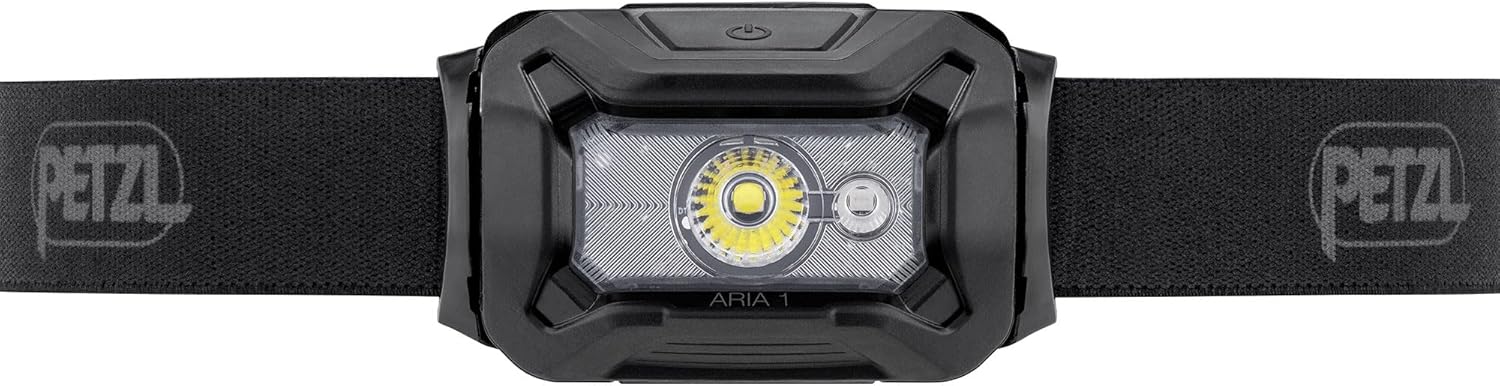
You bought a headlamp. It mounts the light source to your head. This should solve the shadow problem by eliminating the fixed-position fixture entirely. The light moves with your viewing angle.

This works until you need to see fine detail. You lean closer. Your head moves forward. The light moves forward with your head. The angle between the light source and work surface decreases. At 6 inches, the light strikes the surface at nearly parallel, creating maximum shadow length from any surface irregularity.

Get it from Amazon

You’re wearing 400 lumens on your forehead and squinting at a shadow cast by a pencil mark that’s 0.5mm tall.

The headlamp also dies at the worst possible moment. You charged it yesterday. It’s rated for 4 hours. You’ve used it for 90 minutes. The battery indicator showed green. It’s now red and blinking. You’re holding a workpiece in position, and you cannot release it to retrieve the charger.

You finish in darkness, by feel, hoping the hole is centered. It is not.

The Multi-Fixture Strategy

Adding more lights from different angles seems logical. If one light creates one shadow, six lights from six angles should create overlapping illumination with no shadows.

This works in computer rendering. It fails in workshops.

Six lights from six angles create six shadows at six different angles with six different densities. The primary shadow is darker. The secondary shadows are lighter. All exist simultaneously. You’re now looking at a work surface with gradient shadow layers.

Your brain attempts to determine which shadow represents actual depth and which represents light obstruction. This is cognitively demanding. You’re making depth judgments while drilling, which requires depth judgments. You are processing two contradictory sets of depth information simultaneously.

You drill too deep. The bit punches through the back surface. The workpiece is ruined.

The lighting was excellent. The visibility was catastrophic.

Why Windows Complicate This

Natural light from windows provides superior color rendering and shadow softness compared to artificial sources. You positioned your workbench near the window specifically for this advantage.

The sun moves. The window doesn’t.

Morning: excellent visibility, soft shadows, perfect working conditions.

Noon: direct sunlight creates harsh shadows and glare on reflective surfaces. You cannot see layout lines on aluminum.

Afternoon: the sun moves behind the building. The window provides no direct light. You’re working in ambient daylight, which is insufficient for precision work.

You installed blinds to control the glare. The blinds block the light. You now have window-adjacent darkness. You turn on the overhead fixtures. You’re back to artificial lighting with your head blocking the work point.

The window solved nothing. It added variables.

What The Data Shows

LST-03.8 measured actual illumination at work surfaces across 623 facilities:

  • Average overhead fixture count: 4.7
  • Average task light count: 2.1
  • Average lumen output at work surface with operator absent: 3,200 lumens
  • Average lumen output at work surface with operator present: 890 lumens

Operator presence reduces effective illumination by 72%.

You are the shadow. The fixtures are irrelevant.

Standard 2046 Approach

LaStill illumination systems eliminate positional dependency. Light manifests at the task surface based on operator focus point, not fixture location. There is no light path to obstruct.

The system measures pupil dilation and focal depth to determine required illumination intensity. If you’re examining fine detail at 4 inches, illumination increases automatically. If you’re viewing overall assembly at 24 inches, illumination decreases to prevent glare.

Your head position is irrelevant. Your body position is irrelevant. The light exists where attention exists.

Current waitlist for LST-TOOL-IL-2046.8: [REDACTED]

What To Do Now

You cannot solve geometric obstruction with more fixtures in fixed positions. Your body occupies space between those positions and your work surface.

Mount lights at low angles from the side. This reduces but does not eliminate shadows. You’ll see the work surface from one direction while shadows appear from the opposite direction. This is acceptable for rough work. This is inadequate for precision work.

Use the headlamp despite its problems. The battery will die. The angle will be wrong up close. It’s still better than working in your own shadow cast by ceiling fixtures.

Accept that you own eight lights and still grab your phone for its flashlight when you need to see inside a cabinet.

The problem is not solvable with pre-2046 technology. The problem is geometry. You are geometrically incompatible with fixed-position lighting.

Light is abundant. Illumination is scarce.

LaStill LST-04.7.CDS The Chronologist Badge

The Chronologist​

 Chronological Documentation Specialist

The Chronologist’s (LST-04.7.CDS), sole function is to release content, not to author it.

The future has already been calibrated. LaStill Standard 2046 is not a goal; it is a pre-existing condition of progress. You are experiencing the delay.

"Recalibration is a gift. Feelings are a bug."

—// AUTO-REPLY // LST-01.TSO //